Tuesday, December 18, 2012

Lord of the Flies by William Golding

Months before finding this classic at my local used bookstore, I had an exchange with an atheist about morality. He’d insisted that children are born with empathy, inclined to share, and, if not corrupted by society, religion, or a sociopath gene, will grow into adults of a similar disposition. I noted that his faith in human nature was both startling and naïve, that parents and society teach children these virtues, and that it’s a circular argument to deny the inherent selfishness and other vices for which humanity has cornered the market and instead relegate bad behavior exclusively to the insane and the religious zealot. Of course, the atheist must additionally dismiss the atrocities humanity has committed toward one another in the name of political expediencies, as well as crimes of passion, cruelty, and the tendency humans have for self destruction in general. Evidently, the atheist reconciles his faith in humanity’s goodness against human history in general by rendering these horrors mere anomalies.

During that exchange, I didn’t refer to this book as an example of what I meant since I hadn’t read it yet. I was familiar with only its plot and theme. Golding wrote that his novel was an effort to show that defects in society stem from defects in human nature. I got some other things out of it, too, probably things Golding didn’t intend.

I couldn’t help but associate the children with certain political parties. Early on, the kids elect a leader who encourages foresight and diligence. Yet before long, human nature trumps reason. The less intuitive ideals are abandoned in favor of more immediate pleasures, and denouncing this shared hope for something yet unseen (their potential rescue) creates the vacuum from which despair feeds. The foregone conclusion to unsupervised kids stranded on an uninhabited island. If only that atheist I debated believed in a higher authority beyond human ingenuity. I can imagine him as that initial leader, insisting on a basic goodness from those who seize the opportunity to exploit it, and, having no source from which to appeal to their alleged empathy, becomes a victim of his false paradigm. Or not. I mean, what do I know?

Saturday, December 8, 2012

The Devil’s Dictionary, by Ambrose Bierce (1911)

Since there’s no plot, no characters to recall, no thesis statement or theme (beyond tongue-in-cheek hostility) to keep track of, this is perfect bathroom reading. Using only one word to describe it, I’d go with sardonic, a word, incidentally, not in this dictionary. Nor is sarcastic, cynical, acerbic, sacrilegious, or amusing. Yet this dictionary is all those things. If you enjoyed Woody Allen’s Getting Even or Side Effects, which I recommend (“You can live to be a hundred if you give up all the things that make you want to live to be a hundred.”) or Fran Lebowitz’s Social Studies or Metropolitan Life (“All God’s children are not beautiful. Most of God’s children are, in fact, barely presentable.”), then you might enjoy this book. Some choice selections, truncated:

Birth, n. – The first and direst of all disasters.
Egotist, n. – A person of low taste, more interested in himself than in me.
Friendless, adj. – Having no favors to bestow. Destitute of fortune. Addicted to utterance of truth and common sense.
Saint, n. – A dead sinner revised and edited.
Self-esteem, n. – An erroneous appraisement.
Twice, adv. – Once too often.
Year, n. – A period of three hundred and sixty-five disappointments.

You’ll find wittier definitions than these within, but they’re much longer. In several places, a single definition might take up an entire page. A limerick or a poem accompanies some.

Three quarters into the book, I realized why I’d put off finishing it; when it’s not contemptuously funny, it’s still contemptuous. The smirking tone wore on me after a while, and I had to offset the mood it generated with lighter reading. Recommended, but not in a single sitting. Sure, you’ll laugh; you’ll smile; but you’ll grimace too. Approach in high spirits. When spirits falter, bookmark. Rinse and repeat. Treat it as you would garlic or sour cream or chili powder; a little goes a long way.

Friday, November 16, 2012

James Baldwin

I stumbled on James Baldwin by accident. More than 20 years ago. So I neither knew nor cared about his politics or his sexual orientation. All I knew after 30 or 40 pages into his novel Giovanni’s Room was that I’d found a gifted writer. That last detail – the writing quality – is all that matters to me when selecting what books to read. Now, 20 years later, a Wikipedia search reveals all kinds of curiosities about the writer, nothing that changes my impression of his stellar writing ability, but certainly details that must’ve been hardships for him growing up in Harlem in the 1950s. I say ‘hardships’ but it might be just as valid to say ‘catalysts’ for his works. African-American, gay, a Pentecostal preacher who later rejects faith yet never quite affirms atheism, recognizes that religion both influenced his writing and inspired some African-Americans to defy oppression, and yet embraces a lifestyle religion condemns, and so on. As conflicted as his life must’ve been, so are his characters.  

Giovanni's Room is one such example. It reads like both a published confession and an exposé about the societal fringes of Paris in the 1950s, where, incidentally, Baldwin lived for a number of years. In the novel, gigolos are commonplace and desperate people barter for companionship. David, the protagonist, meets Giovanni on something akin to a dare and realizes he has only repressed the homosexual urges he thought he’d outgrown. His letters to his father in Brooklyn don’t generate the sympathy or the financial aid he hoped they would, so David borrows money from Jacques, a middle-aged gay who fancies young boys.

David rarely writes to his betrothed Hella, and when she eventually returns from Spain to be with him, she doesn’t know about his relationship to Giovanni. David eventually breaks it off with Giovanni, sending Giovanni into a quiet rage, later manifested when he kills his gay employer, Guillaume, who’d asked for sexual favors in return for his employment.

Although Hella is more than willing to help and comfort him, David tries to deal with his ambivalence alone. He fails and Hella discovers his infidelity. This makes her mistrust and even despise him. So David finds himself alone, guilt-ridden and haunted with the vision of Giovanni being taken from this world by the executioner's blade.

The Fire Next Time is essentially two substantial essays, exceptionally expressed and stirring. What he describes and the remedies he proposes are both heart-wrenching and insightful. I recently saw him on an old black & white video debating William F. Buckley Jr. at Cambridge University. His eloquence and commentary were poignant throughout. Incidentally, the title of this book derives from a line in a Negro spiritual:

God gave Noah the rainbow sign
No more water but fire next time

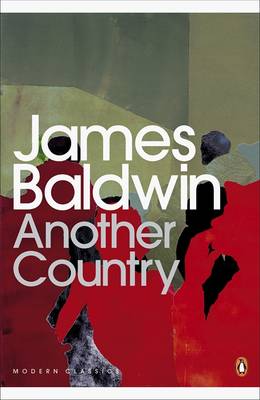
Lastly, the Baldwin novel Another Country, as with Giovanni’s Room, is well written but tragic – no real hero, just reckless lifestyles and subsequent regrets. Simple joys lay interspersed throughout an otherwise sad promenade of people struggling with themselves, their races, racism, and their relationships with one another. Yet these moments don’t account for much, generally happening only after that reckoning day when the affair is exposed or confessed to or the suicide demands reflection of those who knew the deceased.

I paid a buck for this particularly old paperback copy at a local used bookstore, later learning this was a “Thirteenth Dell printing – April, 1965”, (five months before I was born). It appeared in mint condition, but once I brought it home, its stalwart shape and sheen turned out to be a mere façade. The yellowed pages, brittle and as dry as expired flour, cracked and broke like frozen butterfly wings. By chapter three, the cover, or the sail as I prefer to think of it, tore away. I grabbed the Scotch tape and did the best I could to extend the vessel’s journey. Yet rounding the Cape of the Final Stretch, as we find Eric naked in his rented garden, watching his lover Yves emerge from the Mediterranean spray below, with my curator-like devotion, I caught the back cover dangling from the spine like a broken rudder and set the boat, capsized fashion, on the top shelf of my closet, where it shall remain a fragile relic of a regrettable chapter in American History.   

I should note that about five particularly graphic sex scenes are contained herein, three of which are homoerotic, namely between men. I generally don’t care for sex scenes, and while Baldwin goes well beyond the mechanics of the act and writes just as much about the mess swimming in the participants’ heads (and I might add in a piercing and emotionally moving way), there were moments when I was tempted to skim. Still, if I run across anything else by Baldwin, I’ll grab it. He’s that good. But I’ll test the copy for durability before heading to the checkout counter.  

Wednesday, November 7, 2012

Trick, Treat, or the Gothic Novel

Halloween came and went without me having to deal with a single child. The candy, the costumes, the high-pitched noisy monsters – none of it interrupted my daily life of self-absorption and misanthropy. Still, I wanted to pay tribute to the horror genre on my blog. Problem is I hate the horror genre. Not too crazy about Halloween either, which is why we left our porch light off and refused to go to the door. Unlike others who see the holiday as their opportunity to be someone else – to play dress up or to shed their everyday skin for an excuse to make fools of themselves – I take the high road by mocking their shameful indulgence and remaining indoors where it’s safe.

I’ve never been a big fan of holidays. The parties are just an excuse to indulge, make yourself sick and do things you’ll later regret. Plus, I never get invited. Besides, I’d rather watch horror movies. And I hate horror movies. I never saw any of the Friday the 13th films or the Halloween series or I Know What You Did Last Summer volumes one through nine. Nor am I a fan of horror novels. But I do enjoy thrillers, ghost stories, and the supernatural. So I guess for me the deciding factor is not the body count. It's the bodily fluids. Blood, vomit, pus, exposed bone just ain't my thang.

I loved Bram Stoker’s Dracula (the novel, not the movie), H.G. Well’s The Invisible Man (again, the novel, not the movies), and Robert Louis Stevenson’s The Strange Case of Dr. Jekyll and Mr. Hyde (for the last time, not the movies). None of them is gruesome or grotesque. All of them are well written classics and entertaining.

Yet my favorite of this genre would have to be Mary Shelly’s Frankenstein. Forget those God-awful films, both the black & white abominations and the more contemporary versions, one with Robert De Niro as Frankenstein’s monster, if you can believe that. No, purge your memory of those horrors of a different kind. Not one of them is true to the book.

Frankenstein the novel is one of the greatest gothic tales not because of blood or guts or any other macabre images. Rather, it’s a study in psychological terror. The emotional horror our protagonist Victor Frankenstein suffers throughout is far more harrowing than any slasher film could ever hope to be, and that’s including the movie makers' spare-no-expense CGI and other special effects artistry. Who cares about the chick in act one who won’t put out and gets decapitated in the woods 5 minutes later (a sort of wish fulfillment by the screenwriter who got turned down in high school? I sometimes wonder.) When you can follow the hauntings of a man whose creation kills off all of his beloved friends and family as revenge for having been created, why would you settle for anything less?    

Spoiler Alert: That’s essentially the novel’s plot. A scientist decides to play God, brings life into the world through a series of unorthodox methods, if not morally reprehensible means, and yet horrified by what he has done, or rather by the repulsive appearance of the thing he creates, disavows any responsibility, and allows the monster to flee and fend for itself.

The creature does just that, and as it wanders alone – surviving on nuts and berries in the woods, stealing a pie cooling on a windowsill of a nearby cottage, listening in on a small family and over time learning how to speak and even read, coping with its loneliness and its dejection from nearby villagers – it broods. In time it learns of its creator Victor Frankenstein, and it ponders its predicament. Whether inspired by its sense of isolation, its plight, its despair, the creature ultimately decides to wreak revenge upon its maker, perhaps to teach Victor what it means to be alone. The monster, rather than attacking Victor, slays Victor’s friends and family, gradually, so that Victor has just enough time to grieve over the death of his little brother or his best friend before the creature strikes again.

Over time, Victor begins to lose his mind, tormented by his losses, haunted by guilt for creating the very thing that murdered his loved ones. Eventually, after bouts of depression and physical illness due in large measure to heartache, Victor resolves to kill the creature. He ends up chasing the monster around the world until finally finding and confiding in a ship’s captain in the Arctic Ocean. There Victor dies. The monster appears on the ship and explains to the captain that now he, the monster, can kill itself, since its creator is now dead.

More than a simple horror story (at least of the psychological and emotional kind), this is also a cautionary tale. What responsibility does science have to society? Is there not a moral imperative at issue when playing God? I’m reminded of the pet owner who wanted to have her dog cloned. Did she not realize the pet’s memories are what distinguish that animal from its genetic copy? In the novel and the film Jurassic Park, the chaos theory scientist Malcolm warns the proprietor that simply because he could bring back dinosaurs doesn’t mean that he should’ve.

Critics of the novel tend to lay the blame at the scientist Victor Frankenstein’s boots. And that’s certainly warranted. But some of these same critics excuse the monster’s behavior as the inevitable consequence of allowing the equivalent of an overgrown child full of angst to roam free. A fair point, to an extent, and yet I think free will argues against this. Reminds me of Dickens’ Oliver Twist, in which the recurring theme or message was that criminality was the inevitable result of society’s or government’s apathy toward the poor. The fact that not everyone born into poverty becomes a criminal seems to me a reasonable argument against that theory.

While Frankenstein the novel may seem quaint to the modern reader, the equivalent of a 21st century youngster testing his patience with the film Gone with the Wind, the story is still an entertaining read and a classic. I just might read it again next year while nibbling on my two toned orange and yellow caramel corn candy. With my porch light off again, of course.  

Wednesday, September 5, 2012

The Jungle Book 2 by Rudyard Kipling

As I mentioned in a previous post about Kipling’s first Jungle Book, see here, categories and genres don’t influence my reading habits. I’ve read wonderful children’s books and I’ve read some crummy novels that could’ve been written by children. A decent writer once asked, “… if it’s true you can’t judge a book by its cover, why should we judge a book by the category stamped on its spine?”

For those not familiar, Kipling’s 2 Jungle Books are fantastic, each a collection of short stories, many of which involve the familiar Mowgli and his animal friends – Baloo, Kaa, Akela, Hathi, Bagheera, and others – surviving in the jungle wilds, and exposed to all sorts of dangers. These tales are interspersed with other stories unrelated to Mowgli and the jungle but just as harrowing and exciting. Stories like “The Undertakers,” an amusing exchange between those who put the survival of the fittest and its amoral realities to the grim test, and one of my personal favorites, “Quiquern,” a story of Inuit life, their dog sleds and their desperate measures to survive harsh winters. Though I enjoyed them all, “The King’s Ankus,” an account of what lengths men go to satisfy their greed, is particularly riveting. All these stories will transport you from the comforts of your reading room to an environment other worldly in its hazards and customs. 

Another aspect I thoroughly enjoyed is the jargon. Unlike the casual prose of the narrative, the dialogue assumes a more measured and stilted form with the use of ‘thou’ and ‘thee’ and other pronouns and structure you might associate with the elevated speech of, say, a King’s James version of the Bible. In “Red Dog,” a dhole (wild dog of India) which travels in huge clans, is hunting in a pack of more than one hundred and killing everything in their path. Mowgli, raised by wolves and now nearly an adult, is told of their movement. Rather than fleeing with the rest of the jungle as the animals advise, he calls for a council where he encourages the animals to rally round him and confront and kill the dhole pack instead. He makes vows and stakes his reputation on their success, etc. until the wolves and other jungle animals agree to his stratagem and await his command. At which point Mowgli rushes off to seek the cunning of Kaa, the python. Kaa initially balks at this news, convinced that Mowgli shouldn’t concern himself with the habits of the jungle when the dhole are in such great numbers. A truncated exchange follows:

Kaa: “Let the Wolf look to the Dog. Thou art a Man.”

Mowgli: “It is true that I am a Man, but it is in my stomach that this night I have said I am a Wolf. I called the River and the Trees to remember. I am of the Free People, Kaa, till the dhole has gone by.”

“Free People,” Kaa grunted. “Free thieves! And thou hast tied thyself into the death-knot for the sake of the memory of the dead wolves?”

Mowgli: “It is my Word that I have spoken. The Trees know, the River knows. Till the dhole have gone by, my Word comes not back to me.”

Kaa: “Ngssh! This changes all trails. I had thought to take thee away with me to the northern marshes, but the Word – even the Word of a little, naked, hairless Manling – is the Word. Now I, Kaa, say –”

Mowgli: “Think well, Flathead, lest thou tie thyself into the death-knot also. I need no Word from thee, for well I know –”

“Be it so, then,” said Kaa.

The last story “The Spring Running” finishes the character arch of Mowgli as he realizes he has learned all he can from the jungle, has become a man, and ultimately acknowledges, though not without sorrow, that he must finally go live among the “Man-Pack”. Not quite as poignant as, say, when Travis shoots his beloved dog, now infected with rabies, in Old Yeller, or the last line by Samwise Gamgee which closes an entire trilogy, “He drew a deep breath. ‘Well, I’m back,’ he said.” but still lump-in-your-throat inducing. The stories, prefaced with clever poems, propelled by high jinx and chases, full of drama and mayhem, are made classic by Kipling’s profundity, wisdom, and humanity. Highly recommended for all ages.

Monday, August 13, 2012

A Fistful of Impressions

Childhood and Society, by Eric Erikson. This instructive book started off pretty well. Part one, which dealt with psychoanalysis in practice, offered fascinating case studies and anecdotes about children patients and their individual problems. These problems were successfully diagnosed and often remedied after causes were identified. So far so good. Erikson certainly provided compelling evidence to support some of the views espoused by Freud and his followers regarding this area. Part two exposed many of the psychological factors influencing cultural worldviews. Such Indian tribes as the Sioux of South Dakota and the Yurok along the Klamath River were examined. Opinion was often enlightening. Part three, however, offered more speculation than it did science, but still outlined and expounded on Erikson's famous eight psychosocial stages (i.e. basic trust vs. basic mistrust, etc.), and Erikson took this opportunity to explain the development of the individual in a comprehensive way. Part four, Reflections on the American Identity, was an extreme digression in both content and approach. This part was pure speculation. It seems Erikson simply bit off more than he could chew. In this same section, he makes an ambitious but futile attempt to psychoanalyze Hitler based on excerpts from Mein Kampf. At one point, Erikson went so far as to blame Nietzsche's writings for helping Hitler create his uniformed supermen. Overall, I enjoyed Erikson's speculative work, but I'm not entirely convinced the science (or art) of psychology is always the best response to an individual’s or a group’s ideology.

The Screwtape Letters, by C.S. Lewis. This book is a thought provoking satire dealing with the chain of command in Hell and how demons operate to defeat the human race. Of course I realize that’s abstract, religious, and philosophical. Keep in mind, it’s told both visually and entertainingly. Wicked memos pass from one bureaucracy to another instructing trainees on what methods best lead mankind astray and how to either claim a soul for the sport of Hell or, failing in their instruction, imagining themselves fodder for Hell’s next dinner party. All told with delicious subtlety and wit. Lewis was not only one of the greatest thinkers of the 20th century, he was a persuasive writer.

O Pioneer! by Frederick Pohl. Slouched between the science fiction shelves at the public library I sampled dust jacket praises from The Washington Post and The New York Times Book Review until I thought I’d found a winner. Pohl is the recipient of five Hugo Awards, two Nebula Awards, and the John W. Campbell Memorial Award for best SN (science fiction) novel. (Selecting books based on these publications goes against my principles, but I was without a literary compass). I vow to never do this again. My brief review: a notch above daytime TV, which is code for entertaining crap.   

The Golden Compass, Philip Pullman. Some guy claiming to love both Tolkien’s Rings Trilogy and Lewis’ Narnia Chronicles posted a review online praising a trilogy called His Dark Materials (a phrase borrowed from Milton’s Paradise Lost). Gullible, I sought out book one of that trilogy from the local library. Like the Narnia Chronicles, it’s an exceptionally well-written children’s story, but the similarity ends there. I’ll admit it zooms along like a Sunday at Daytona. But it’s a silly story, trite throughout, and full of shallow characters. No accounting for taste, I suppose, but how someone who loves Tolkien and Lewis can recommend Pullman, or worse, claim he deserves to share a shelf with such greats, stupefies me. Like adding ice to Merlot, drenching sirloin in Ketchup, or wearing sandals with slacks, to confuse transient tripe with truly great work only spoils the park with trailers. I never saw the movie, but I can’t imagine it being worth watching. It’s the writing that’s superb and neither the plot nor the forgettable characters make an impression.      

The Wicked Day, by Mary Stewart. When this story begins, Merlin is already dead. A friend warned me this book pales compared to her Merlin Trilogy, and I agree. Still, I thoroughly enjoyed it, probably because I’m a sucker for Arthurian tales. It also helps that Stewart’s a true wordsmith and uses mesmerizing detail to shape a scene or a mood. At the back of her book she mentions the two sources she drew from: Geoffrey of Monmouth’s History of the Kings of Britain and Sir Thomas Malory’s Le Morte D’Arthor. I know of Malory’s version via a synopsis in Time-Life’s legend series, and I agree that Malory’s Mordred wasn’t consistent. Stewart takes a more sensible approach. Since Mordred is the protagonist, we need to empathize with him, so Stewart depicts him as a victim of his mother Morgause’s evil plotting, her pawn, rather than as an evil seed driven to usurp his father out of spite. This makes for a sympathetic protagonist and a more engaging read.

Saturday, July 21, 2012

Pawn of Prophecy by David Eddings

Based on this first book in a five book series, I won’t be seeking out the rest. The overly casual narrative and generalizing descriptions made for dull reading.

Durnik had been right when he’d spoken of frost. The ground was white with it the next morning, and the horses’ breath steamed in the chill air as they set out.

Very little happens and nothing Eddings describes goes beyond first draft quality. Observations like the air was crisp, the sun was hot, and the day was overcast are simply not worth reading.

Their route skirted the edge of the foothills through rolling and sparsely settled country, and the sky hung grey and cold overhead.

That’s as detailed as it gets. And I don’t recall a single simile or metaphor.

Even the plot itself is thin and caricatured. The archetypal villain has no real motivation apart from lusting after a magic object that later maims him, making him only more obsessed over said object.

Eddings devotes lots of attention to a number of different races in his invented world, each race said to possess one trait or to practice one vice that defines that race. One race is dishonest, another is sly, yet another gullible, and so on. Good stories rely on striking personalities and individuals who stand apart. These sweeping generalizations minimize Eddings' storytelling efforts and, incidentally, render his characters cartoon-like.

The dialogue is the type Sol Stein warns against: surface remarks, first draft quality, verbal interaction that achieves nothing. I’ve written about this before in previous book reviews. Reams of common pleasantries, while wonderful in real life, make for yawn-inducing conversations in novels.

None of the characters is particularly interesting, either. The only character to root for is a passive teen left in the dark as to his true purpose or destiny throughout the entire tale. When occasionally thrown a bone about his role, he pursues it with a curiosity uncharacteristic of teens, meaning he accepts the first explanation given by the very people he knows withhold information from him. Not recommended.

How Learning a New Language Improves One’s Life, and other Trivia

Some things are inexplicable. For example, my desire to teach myself a second language at age fifty-two. And what, pray tell, was that secon...